Music Production · Guide
How to learn music production at home
One DAW, headphones you already own, and a finished track a month. Here is the order to learn things in, and the gear you genuinely do not need yet.
The Nextversity teamMusic Production schoolUpdated August 10, 20266 min read
On this page
The short answer
You need a computer, a DAW and headphones. Everything else is optional and most of it is premature.
Then learn in this order: make loops, finish short tracks, learn arrangement, learn mixing. The most common mistake is learning mixing first, which is polishing something that is not built yet.
One finished track a month beats a hundred unfinished ideas, and the second one is where almost everybody ends up.
The gear you actually need
A computer. The one you have is probably fine. Music production is less demanding than video or 3D until you stack a lot of plugins.
A DAW. FL Studio for beat-driven electronic music, Cubase for recording and traditional arrangement. There is a comparison if you are deciding. Both have trials.
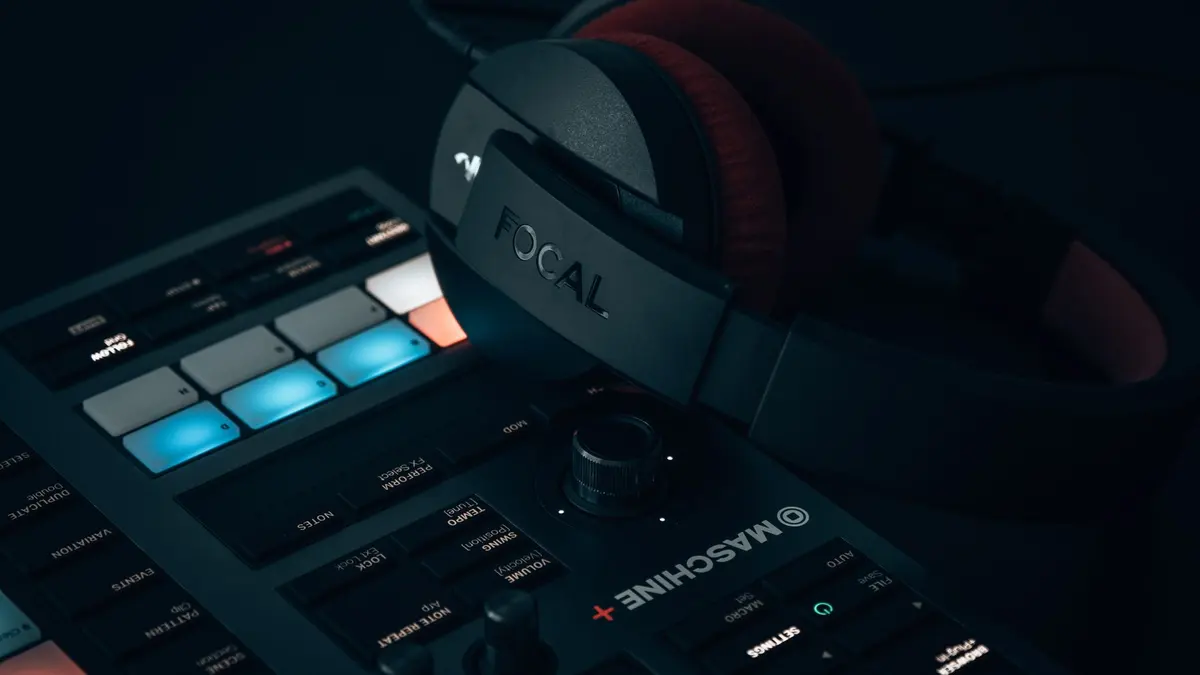
Headphones. Any decent pair to start with. Learn how they sound rather than buying three pairs.
The gear you do not need yet
- Studio monitors. Useful in a treated room, misleading in an untreated one. Headphones first.
- A MIDI keyboard. Nice, and you can draw notes with a mouse for a long time.
- An audio interface and microphone. Only if you record live sound. If you produce entirely in the box, they do nothing.
- Plugin bundles. Your DAW's stock plugins are better than they were and better than your ability to use them for at least a year.
- Acoustic treatment. Matters, and later than you think.
Spend the money on time instead. The list of producers held back by gear is much shorter than the list held back by never finishing anything.
The learning order
1. Make loops (weeks 1 to 4). Learn your DAW's basic workflow. Drums, bass, a simple melody. Eight bars. Do it twenty times.
2. Finish short tracks (months 2 to 3). Take a loop and make it ninety seconds with a beginning, a middle and an end. Deliberately short, so you finish.
3. Learn arrangement (months 3 to 6). Intro, build, drop, break, outro. What changes and when. This is the stage where tracks stop sounding like loops, and it is the least glamorous and most valuable skill in the list.
4. Learn mixing (month 6 onward). EQ, compression, reverb, levels. Less than you think, applied deliberately. Mixing cannot rescue an arrangement that does not work, which is why it comes fourth.
5. Mastering. Last, and the honest answer is that a professional or a decent service will beat your early attempts for a long time.
Music theory, honestly
You do not need it to start. You will want a little sooner than you expect.
The useful minimum: what a scale is, how a major and minor chord are built, and what a chord progression does. That is a few hours of study and it removes a lot of trial and error.
Beyond that, learn theory when you hit a wall. Learning it in advance, from scratch, is a common way to stop producing for three months.
Twenty focused minutes a day beats a heroic Sunday. Consistency is the only study habit that survives a bad week, and music production is full of bad weeks.
The habit that decides everything
Finish things.
Almost everyone learning production has a folder of forty eight-bar ideas and no finished tracks. Those forty loops taught them one skill (making loops) forty times.
A finished track, even a bad one, teaches arrangement, transitions, mixing decisions, and how to stop. Those are different skills and you only learn them by going through the whole process.
Set an artificial deadline. One track a month, finished and exported, however you feel about it. Post it somewhere or do not, and either way move on to the next one.
Where to get better faster
- Reference tracks. Load a song you love into your DAW and compare. Levels, arrangement, where each element sits. This teaches more than most tutorials.
- Recreate a track you like. Not to release it. To find out how it was built.
- Finish, then critique. Not while producing, which just stalls you.
- One genre for six months. Depth beats variety while you are learning.
Image-Line's manual and Steinberg's Cubase pages are the official references for the two DAWs.
Where to learn it
The Music Production school covers FL Studio and Cubase end to end, from first pattern through arrangement to mixing. There is also a first-beat walkthrough to start with today.
One subscription opens both courses, so trying the other DAW later costs nothing.
Computer, DAW, headphones. One finished track a month. That is the whole plan.
Questions people ask
What do I need to start producing music at home?
A computer, a DAW and headphones. That is genuinely it. An audio interface and a microphone are only needed if you record live sound.
Which DAW should a beginner use?
FL Studio for beat-driven electronic music, Cubase for recording and traditional arrangement. Any modern DAW can make any music, so pick one and stay with it.
Do I need to know music theory?
Not to start. A little goes a long way: scales, and how chords are built. You can learn it alongside producing rather than before it.
How long does it take to learn music production?
A first loop on day one. A finished track within a couple of months. Tracks you are happy to release usually take a year or more of consistent work.
Do I need studio monitors?
Not at first. Decent headphones and learning how your room and gear sound matter more. Monitors help in a treated room, and an untreated room can make them misleading.